
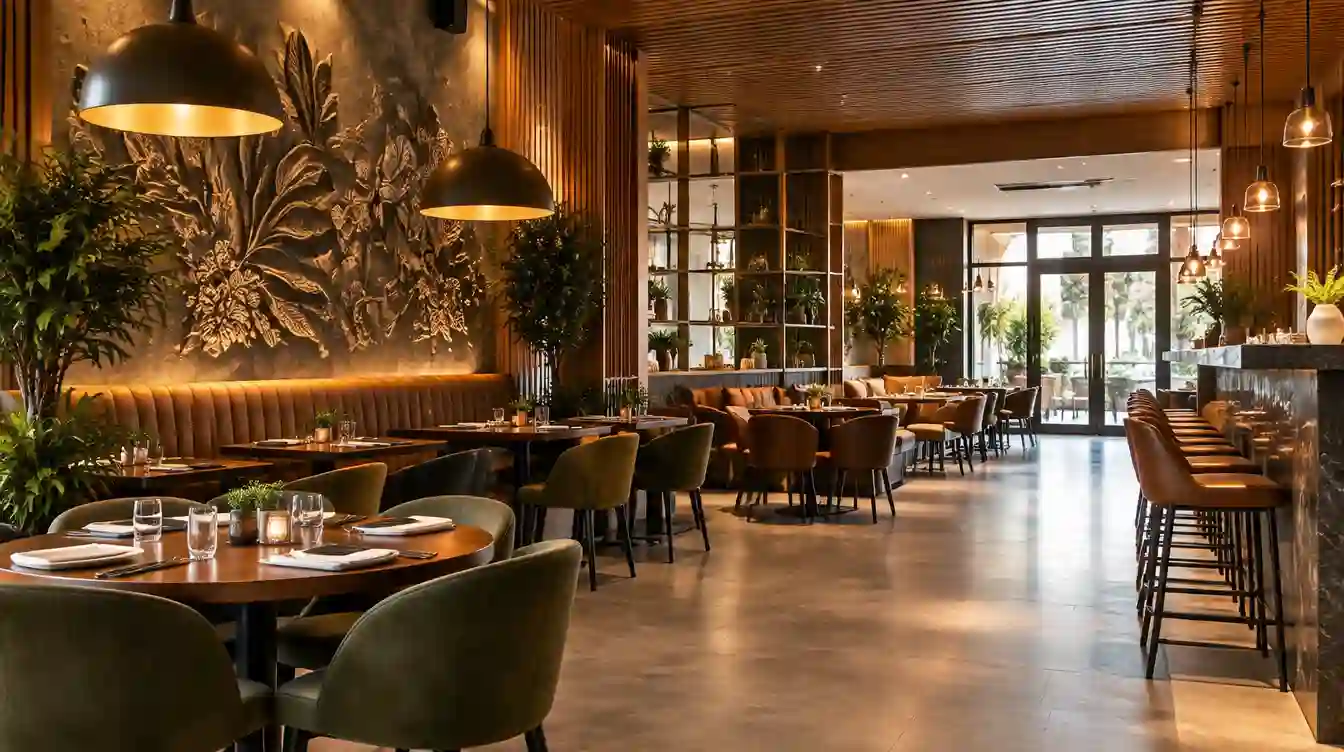
A restaurant's interior is about more than just aesthetics. From the second customers walk through the door, the interior of a restaurant must express a restaurant's character, positioning and entire eatery introduction. The choice of colours, furnishings, textures, accessories, and the use of area through the layout contributes to atmosphere and impact guests' foodways expectations, while well thought-out restaurant interior design maintain visual rehashing whilst echoing comfort, practicality, and flow of guests, establishing a memorable profile for a restaurant, that connects back to the cuisine, service, and customer demographics.
A restaurant's environment can, quite frankly, shape a customer's view of a brand before they have even tasted one bite. With Restaurant Interior Design we are hoping to create that subtle, delicate yet fully integrated effect with regards to design, colour, furniture, lighting, materials and space. For example, warm colours and seating has a welcoming ambiance.
Clean lines and luxurious materials can communicate a high-end feel with the concept that resonates throughout signage and other points of engagement within the restaurant interior. All of these relationships in the environment create a visual shorthand that sits alongside the concept of the part of a bigger restaurant brand identity.
Right physical + visual cues turn the brand strategy into a recognised space on arrival. Here are some of the Restaurant Interior Design Elements:
All visual elements should reflect the positioning of the restaurant and to cater for your target audience. Colors in a restaurant design plan can set a tone and become a defining characteristic, a restaurant colour scheme can create visual recognition, fixtures and finishes add a unique character to a space, materials used in furniture can be balanced between aesthetics and practicality, while decor express the concept through art, accessories and stylistic details.
Lighting can set the mood through excellent Restaurant Lighting Design you will be able to create intimacy, add accents to the architecture and enhance the food presentation. Cranking up the light can work well for fast casual designs, and if the whole restaurant is softly lit it creates intimacy and, the right light design will build a cohesive restaurant ambience.
Seating and layout should reflect comfort, movement, efficiency and the concept.
All touchpoints to customers should reflect on cohesive visual language, without seeming like a new 'look and feel'. The entryway can set the first mood, then the seating, counters, and signage should follow the same principles. Decor, menu designs, graphics, and other visible elements should support the colours, typefaces, materials, and personality of the restaurant. All helps customers distinguish and relate to the brand faster.
On the other side of the coin, a strong coordinating effect with all of these elements Defos Design can enhance a Restaurant Brand Experience, while insightful interior branding helps the physical environment and the restaurant interior branding.
The new era of restaurant design brands are trying to design spaces that are exciting and appealing to diners without compromising practicality. Below are some of the trending designs in the industry:
Restaurant customer experience ensures that the environment of the restaurant can be created to make sure the customers' experience is to their satisfaction and affect how they behave and move around. The design of the restaurant interior design can create such things as comfortable seating, adequate lighting, direction, and privacy to ensure the customer is received warmly.
Visual cues such as decor, finish, and furniture placement can add to the experience and enhance the environment of the eating area. If this all aligns effectively customers will have a better, more comfortable experience that leads to them associating their experience with the brand of the restaurant.
Unique interiors are one way to help your restaurant stand out and be memorable. Here's some restaurant branding ideas for your interiors to consider:
Creating a restaurant to design a restaurant requires a delicate balancing act of visual and practical requirements and flow. Typical challenges are:
Thoughtful planning ensures your restaurant design decisions all come together with the concept. Whether it's layout, furniture, finishes, lighting, branding or how the space functions, everything must come together while supporting the everyday running of the restaurant.
A specialist restaurant interior design service may help coordinate the design development and implementation of your restaurant, ensuring there's less gap between what was planned and what was delivered. Defos Design considers the visual identity of your restaurant as well as the practicality, ensuring the space can deliver on the experiences you want for the business.
Visit Defos Design for restaurant interior design services to craft a cohesive eating space that complements your concept.
Creating an atmosphere that unified restaurant space can help to create a distinctive tangible experience for your brand concept. Uniformed decision making about layout, colour schemes, lighting, furniture and interior design can help to build the restaurant brand identity and deliver comfort and familiarity for your customers.
|
Restaurant interior design will help to balance form and function. Whether you are opening a new space or remodeling one, Talk To Defos Design about your restaurant design needs. |
Colours, materials, furniture, lighting, layout, and décor translate brand personality into a physical setting, helping create a consistent and recognisable restaurant brand identity.
Key restaurant interior design elements include layout, lighting, furniture, colour schemes, materials, branding details, customer comfort, and functional flow between different areas.
Yes. Thoughtful layouts, suitable ambience, comfortable seating, accessibility, and visual appeal can create a smoother, more welcoming environment and enhance the overall restaurant customer experience.
A successful interior should express the brand through colours, materials, décor, and design details while maintaining practical circulation, comfortable seating, efficient service areas, and easy navigation.
Restaurants should consider their concept, target customers, available space, operational flow, material selection, lighting, furniture, budget, and execution requirements before finalising the design.
Defos Design can help restaurants develop cohesive interiors by aligning layout, branding, materials, furniture, lighting, functionality, and execution with their intended design concept.