
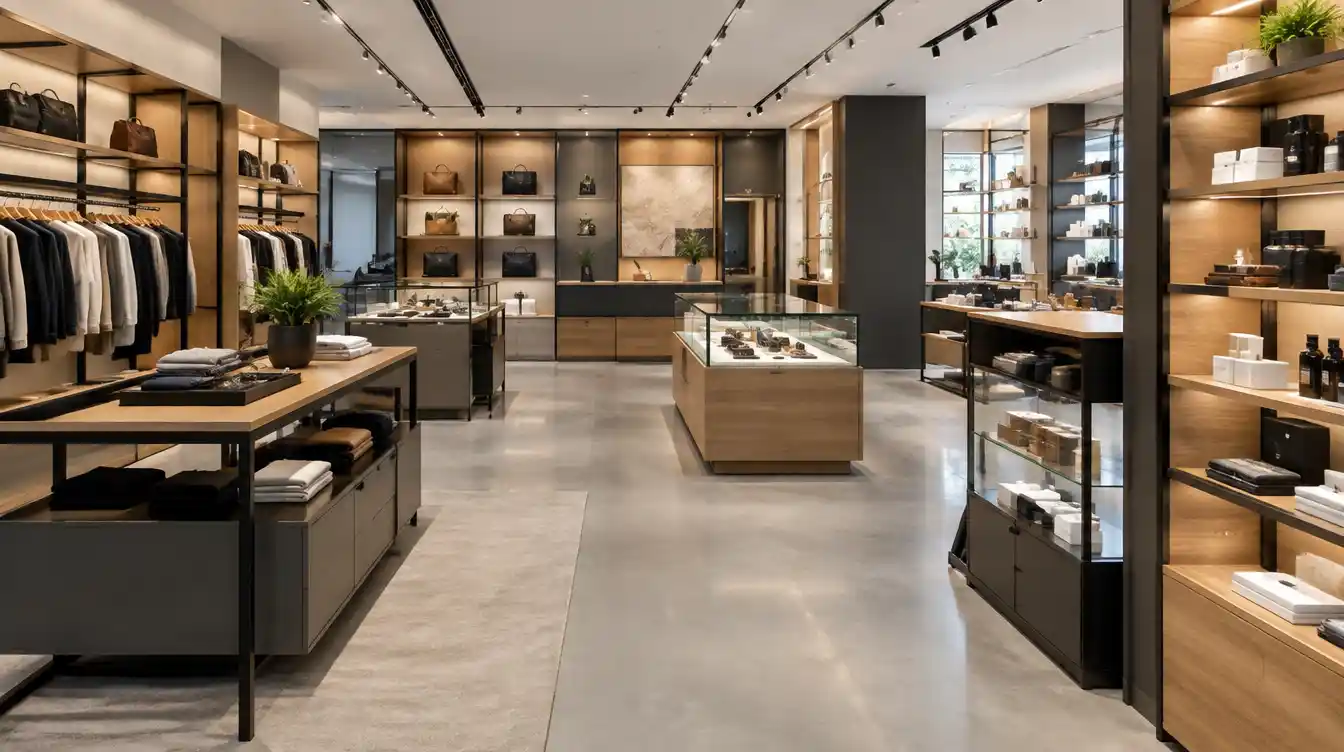
It's not just about us storing or displaying products on shop furniture. How shop furniture is planned can have a real bearing on the ease of navigation for your customers, how they shop products, and how they seek out groups of products. Good retail shop furniture can be used to aid your team with restocking, cleaning, billing, and such. Shop furniture size, height, access, position, and a logical layout can lead to a better-run retailing environment for products, better readability and visibility, and greater use of floor space.
The layout of your Shop Furniture Design significantly impacts how shoppers maneuver around a retail space. Placing counters, display units, shelves and racks in the right position and scale can not only ensure walkways remain accessible, but that they're clear of excessive congestion.
A good retail furniture layout arrangement will enable customers to move easily from one area of the store to another without obstructions and with the benefit of having a clear sight-line at all times. This can also be used to manipulate customers to pass through certain sections of the shop layout.
Foot traffic can be subtly directed around your shop using a clever shop furniture layout. This can be achieved by placing shop shelving and shop display cabinets in a way that takes customers directly between different areas of products, with wide aisles between.
Grocery store aisles, check out counters, narrow passageways, entrance areas can be congested. Accordingly, it is a good idea to allow sufficient space around the retail shop furniture items. Good use of store furniture planning can also help in establishing different queues and browsing areas.
Furniture height plays a key role in how a store's products are viewed. Taller fixtures offer increased space for both storing and showcasing stock but risk putting other display fixtures out of sight. Shorter display fixtures help to open up the store and give the customer a glimpse of the entire display, enticing them to walk further in.
Shop display furniture can be used to not only display the relevant merchandise but to ensure it is part of the overall 'shop fit' layout. Different heights can also be used to make products appear in order of importance.
Highly prominent or actively promoted items are usually positioned within easy eye and hand reach. Product display furniture can employ proper shelf heights to place important products at eye-level for the customer, while other products can be parked below.
Shop furniture can break up a retail store into workable product sections without the need for fixed walls. Shelves, counters, racks and other display furniture can be used to split product areas but a retailer's stores remain linked. Retail store furniture can be used to create specific sections for regular, new, promotional or high-end products.
Clearly defined sections enable customers to navigate products with less hassle and take away some of the hassle for staff in keeping certain areas stocked and organised. It can also make product categories more easily distinguishable.
With retail display furniture you can distinguish between space for ordinary merchandise, offers, new products and highlights. Utilize matching store fixtures to create a differentiation and help the transitions from one space to another be more fluid.
The height and distribution of the fixtures control browsing customers' handling, viewing and movement. Customized shop furniture can be built to correspond to the measurement of storage and packing, the grabbing practices, and the particulars of the product. Counter tops, open and enclosed shelving, cupboard depth, clearance and height all influence the pick up, retrieve and deal with ease of products at the shelf level.
Fixtures that are too deep are difficult for the shopper to access, and the glass spaces between the units are such a square footage trap. Fit-out must be correctly proportioned to limit customer density.
Make browsing effortless in your retail shop with custom retail furniture by installing open shelves, with room between shelving and display shelving that is just within reach. Use shop display furniture that is accessible, yet not so close together or so low to the floor that it's hard to see.
The backbone of the window display shop furniture comprises the structure of a visual merchandising. A number of different shop fixtures can be used to display selected products, create visual hierarchy and draw a customer's eye to the important sections. Display counter manufacturer like Defos Design help in walls and centre furniture to create focal points throughout a shop.
Retail display furniture may be used in seasonal campaigns and during promotional ranges and new product launches. The showroom shop counter for example might be specially produced to specific sizes, fashions or requirements to suit specific stock. When visual merchandising and shop furniture are used in harmony the product is displayed attractively and neatly without making the store appear untidy.
Counter frontage, wall units, feature counters and display stands offer another way to define areas in a store. Display furniture enables you to promote certain products and retail merchandising fixtures can draw attention to more expensive or promotional items.
How checkout furniture and counters are set out affects how customers queue and working staff. There should be sufficient space in the checkout area for work benches, packaging materials, till areas and shop stock close to the tills, and will allow customers to queue in single file without blocking major routes through the store.
Shop counter furniture may include some instant shelving for those not-so-impulse buys to lure the last-minute shoppers, but be sure it does not block the queue or salespeople. A good checkout set up would have to consider space, customer's needs and working area for the staff.
Counters and shelving that have quick servicing points, so your staff can refill points of sale quickly. Fixtures even at a distance can be attractive and easy to clean. Retail store furniture is designed to allow your staff quick access to the items they sell most of and keep the customer-facing areas tidy.
Well-planned shelving fixtures minimise the distance to walk between shelving, displays, and checkout counters and make life a whole lot easier for the employees of busy venues. Workers may move easily from one place to another without wasting any time as they restock shelves, assist shoppers and take money throughout the day.
Lighting can be added to certain pieces of retail furniture in order to give the product more visibility and add to the overall presentation. Lighting (shelf lighting, lit cabinetry and LED features) can also be incorporated into your retail shop furniture to complement your retail shop display rather than having to radically change the entire shop lighting. Customized Shop Furniture are designed and manufactured to incorporate lighting in shelves, counters and display areas where possible.
When planning retail furniture design, lighting should be taken into account so to keep special features always visible and free of glare. It can also be used to create visual key areas of the retail store and define individual product areas in deep shelved stores.
Furnishings could also have a contribution to making a visible identification. Colour, complete, subject matter, form, texture and special options may all be used to strengthen a store and store idea. At the same time as specialist shop fitting could enable a shop to be seen as one-of-a-kind instead of an off-the-shelf store.
For example, you will find that simple shapes with a smooth finish will enhance a contemporary retail style, whereas other textures or finishes will give a more specialised character.
A retail fit-out and furniture company like Defos Design could also assist with integrating the furniture pieces into the wider interior design so that counters, displays, shelves, and storage will be suitable altogether.
Various retail formats have different requirements for display and operation. Such as:
A shop furniture manufacturer in India like Defos Design can design and manufacture a stock of customized shop furniture that can be constructed in line with the type of product(s) to be displayed and assembled, floor space, and customer travel and maneuverability requirements.
Here are some of the common shop furniture design mistakes that need to avoid:
Shop furniture determines walking routes, aisle space, and congestion points, helping customers move naturally between different product sections and store areas.
Retail shop furniture height affects product visibility, customer reach, sightlines, and the amount of openness customers experience while moving through the store.
Yes. Customized shop furniture can use available walls, corners, and floor areas efficiently while maintaining practical access and comfortable customer movement.
Retail display furniture creates focal points, separates product categories, and provides suitable spaces for promotional, seasonal, and featured merchandise.
Shop counter furniture can support organised queuing, staff movement, billing activities, storage, and suitable placement of impulse products near checkout.
Defos Design can help businesses plan shop furniture around store layout, product display, customer movement, and functional requirements, creating a more organised and practical retail environment.
Good shop furniture design helps not just your products on display, it aids your business too. If properly constructed, layout can provide a simplified flow of customers to look around and discover things easily, make items easier to locate, make browsing simpler, enable for better visual merchandising, allow for more efficient check-outs and create staff spaces.
Well-experienced Shop Furniture Manufacturer In India like Defos Design will also contribute to your branding requirements as well as meeting your format needs – taking flow, heights, access, zoning, lighting and operations into account for a welcoming, practical store design.